Key Data at a Glance: Studying in Sydney in 2026
| Metric | Figure | Source |
|---|---|---|
| Total international students in Sydney | ~185,000 | Australian Bureau of Statistics, 2026 |
| Top 3 universities (QS World University Rankings 2026) | #19 Uni of Sydney, #22 UNSW, #88 UTS | QS, 2026 |
| Average undergraduate tuition (international) | AUD 42,000 – 54,000/year | University websites, 2026 |
| Average postgraduate tuition (international) | AUD 38,000 – 52,000/year | University websites, 2026 |
| Living costs (single student) | AUD 24,000 – 28,000/year | Department of Home Affairs, 2026 |
| Part-time work limit | 48 hours/fortnight | Temporary relaxation made permanent in 2026 |
| Minimum hourly wage | AUD 23.23 (July 2026) | Fair Work Commission |
| Post-study work visa (subclass 485) for a Bachelor degree in Sydney | 2 years | Department of Home Affairs, 2026 |
| Post-study work visa for a Master by Coursework in Sydney | 3 years | Department of Home Affairs, 2026 |
Why Choose Sydney for Your Studies?
Sydney is home to three globally ranked top-100 universities and over 40 higher education providers. International students consistently rate Sydney in the top 5 most liveable student cities worldwide (QS Best Student Cities 2026), thanks to its 300+ days of sunshine per year, multicultural population – nearly 40% of Sydneysiders were born overseas – and strong graduate employment rates.
Beyond rankings, Sydney offers a rare mix of beachside lifestyle and corporate opportunity. The city hosts regional headquarters for 60% of ASX 200 companies and over 600 multinationals, creating direct internship pipelines for international students in fintech, health, construction, and creative industries.
Cost of Studying in Sydney: A Realistic Breakdown
International students often underestimate Sydney’s living expenses. The 2026 financial capacity requirement for the student visa (subclass 500) is AUD 24,505 per year for a single applicant, but most students spend closer to AUD 28,000 when factoring in occasional travel, social activities, and phone plans.
Average Monthly Living Costs (2026)
- Accommodation (shared apartment): AUD 1,200 – 1,800
- Groceries and eating out: AUD 500 – 700
- Public transport: AUD 150 – 200 (concession Opal card available for some students)
- Utilities and internet: AUD 150 – 200
- Health insurance (OSHC): AUD 50 – 70 per month (mandatory)
- Leisure and miscellaneous: AUD 300 – 500
Tuition varies significantly by discipline. A Bachelor of Commerce at UNSW costs AUD 49,800 per year in 2026, while a Bachelor of Arts at UTS is AUD 35,000. Medicine and dentistry can exceed AUD 80,000 annually. Research degrees (PhD) often come with tuition fee scholarships for high-performing candidates, making Sydney unexpectedly affordable for doctoral study.
Top Universities in Sydney: Rankings and Strengths
University of Sydney (QS #19, 2026)
Oldest university in Australia (founded 1850), strong in medicine, law, and humanities. Its Master of Management (CEMS) ranks #1 in Australia for employability. 35% of its 70,000 students are international. Main campus sits in Camperdown, 10 minutes from the CBD.
UNSW Sydney (QS #22, 2026)
Australia’s top university for engineering, computer science, and renewable energy research. UNSW graduates report a median starting salary of AUD 77,000 in 2026 according to the Quality Indicators for Learning and Teaching (QILT) survey, the highest among Sydney’s Go8 universities. The Kensington campus is a 15-minute light rail ride from the city.
University of Technology Sydney – UTS (QS #88, 2026)
UTS has climbed 40+ places in five years, largely due to industry-linked degrees in data science, AI, nursing, and design. Its central location in Ultimo means internships at nearby tech parks and startups. UTS is number one in Australia for citation impact in artificial intelligence fields (Times Higher Education 2026).
Other notable institutions include Macquarie University (QS #133) with Australia’s highest-ranked Master of Applied Finance, and Western Sydney University (QS #301-350), which dominates in nursing and occupational therapy placements.
Student Visas and Post-Study Work Rights in 2026
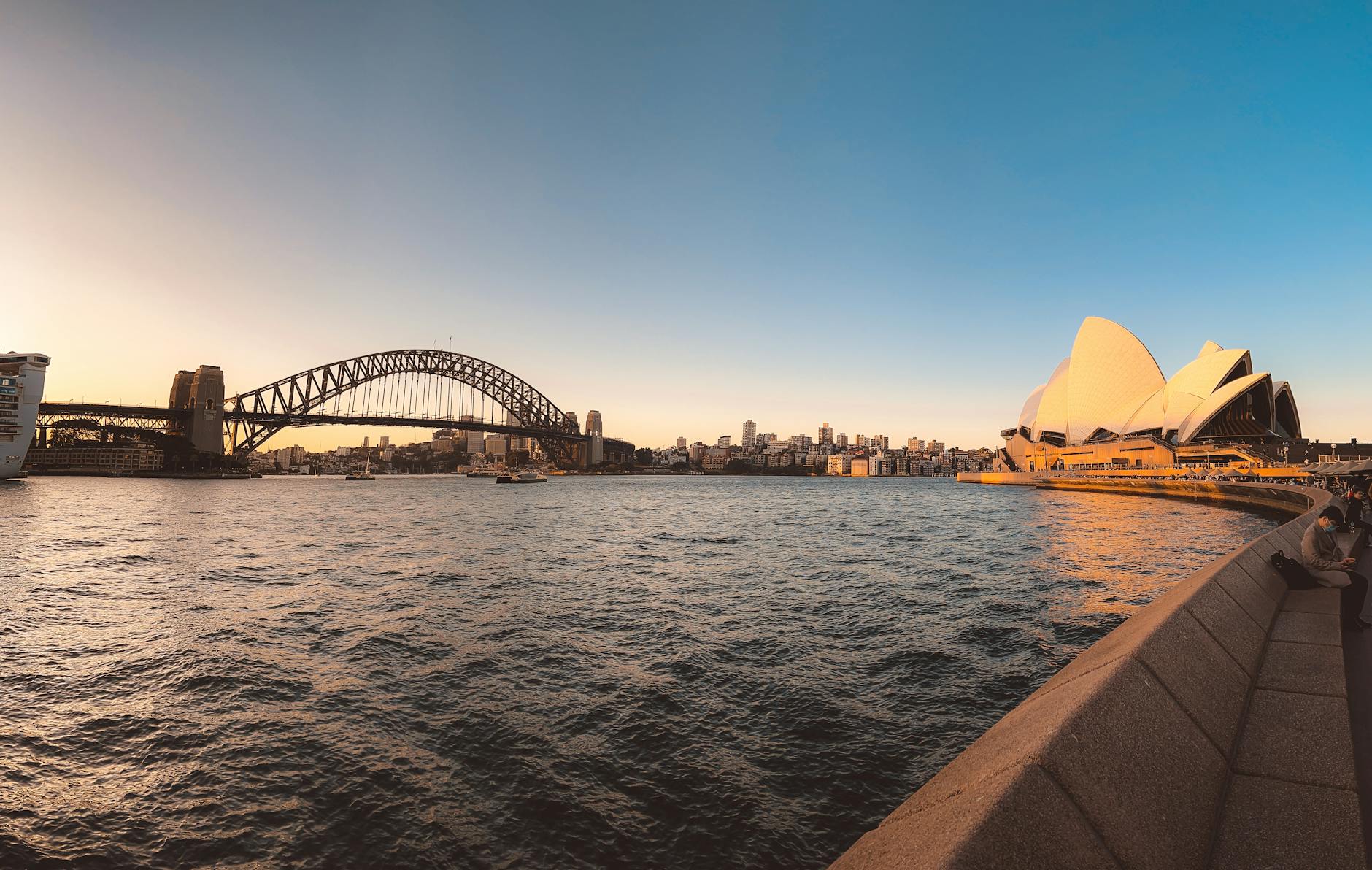
The Department of Home Affairs has stabilised visa settings in 2026 after several years of rapid policy shifts. Key points:
- Genuine Student (GS) requirement: Replaced the GS test; applicants need to demonstrate academic progression logic, not just an intention to migrate.
- Evidence of English: Minimum IELTS 6.0 for a Bachelor, 6.5 for Master/PhD, or equivalent PTE Academic / TOEFL iBT scores.
- Financial capacity: Show at least AUD 24,505 for living costs plus one year of tuition.
- Dependants: You can bring a partner and children, but the costs add up; additional funds of AUD 8,574 for a partner are needed.
Post-study, the Temporary Graduate visa (subclass 485) Post-Higher Education Work stream offers flexible work rights. A Bachelor graduate can work for 2 years, Master by Coursework for 3 years. PhD graduates from Sydney institutions currently qualify for 4 years under the degree-based extension program that was cemented in early 2026. A new points-based skilled visa pathway (subclass 189/190) heavily favours graduates with Australian credentials in health, education, and IT, making Sydney a strategic launchpad for permanent residency.
Employability and Graduate Outcomes for Sydney-Trained Students
QILT 2026 data shows that 78.4% of NSW-based international graduates who sought full-time employment were in a job within 6 months. Sydney-based graduates have a distinct edge in sectors like financial services (AMP, Westpac, Macquarie Group hire heavily from UNSW and USyd), construction project management (strong demand for UTS and WSU graduates on Sydney Metro projects), and digital health (growing ecosystem around the Westmead Health Precinct, Australia’s largest medical research cluster).
Average starting salaries for international graduates in Sydney (QILT 2026):
- Engineering: AUD 75,000 – 85,000
- Computer Science / IT: AUD 72,000 – 90,000
- Accounting and Finance: AUD 65,000 – 78,000
- Nursing: AUD 68,000 – 75,000 (with strong overtime loadings)
- Business and Commerce: AUD 62,000 – 72,000
H2: Student Life in Sydney: Accommodation, Transport, and Safety
Accommodation: 42% of international students in Sydney rent privately (flatmates.com.au, realestate.com.au), while 28% live in purpose-built student accommodation (Scape, Iglu, Urbanest) priced at AUD 350 – 550 per week, usually including utilities. University-managed residences are an option but fill up 6–8 months in advance for Semester 1.
Transport: Opal card gives access to trains, buses, light rail, and ferries. The Sydney CBD to UNSW light rail journey is under 20 minutes. Full-time international students are not eligible for government-subsidised travel concessions, so budget AUD 45 – 55 per week on transport.
Safety: Sydney consistently ranks in the top 10 safest global cities (Economist Safe Cities Index 2025). Campuses have 24/7 security, well-lit paths, and free shuttle buses at night.
Q: What are the English language requirements for Sydney universities in 2026?
Most universities require IELTS 6.5 overall (no band below 6.0) for undergraduate and postgraduate coursework degrees. PTE Academic scores of 58–64 are widely accepted. Some competitive programs – law, physiotherapy, teaching – may demand IELTS 7.0 or 7.5. Always verify directly with the institution, as requirements shift slightly each intake.
Q: When should I apply to start studying in Sydney?
The two main intakes are Semester 1 (February) and Semester 2 (July). Applications for Semester 1 typically open in March–April the preceding year and close in October–December, depending on the university. Scholarship deadlines are often 2–3 months earlier. Allow 6–8 weeks for visa processing in peak periods.
Q: Can I get a scholarship to study in Sydney?
Yes. The Australian Government’s Destination Australia Program continues in 2026, offering up to AUD 15,000 per year for regional campuses (which includes some Western Sydney University locations). University-specific scholarships include UNSW’s International Scientia Scholarship (full or partial tuition), USyd’s Vice-Chancellor’s International Scholarship (up to AUD 40,000), and UTS’s Academic Excellence Award (25% tuition reduction). Separate research training program (RTP) stipends fund many PhD candidates fully.
Q: Is studying in Sydney worth the cost compared to other Australian cities?
Sydney is about 15–20% more expensive than Melbourne or Brisbane in living costs, but it offers a 9% higher graduate starting salary on average, according to QILT 2026 comparisons between capital cities. It also has a denser corporate headquarters concentration, which accelerates career growth for business and technology graduates. For those prioritising a vibrant city with strong Asian-Pacific connections, the premium is often justified.
Q: What is the process for bringing my family while I study in Sydney?
Under the subclass 500 visa, you can include a spouse/de facto partner and dependent children in your application. You must demonstrate additional funds (AUD 8,574 for a partner, about AUD 3,500 per child) and your partner can work up to 48 hours per fortnight. School-aged children will need to pay international tuition at New South Wales public schools (approximately AUD 12,000–15,000 per year in 2026).
Q: How do the new 2026 Genuine Student requirements affect my application?
The Genuine Student (GS) requirement asks you to write a statement (up to 300 words in English) explaining your choice of course, provider, and why Sydney rather than a home-country institution. You should link the course to your career aspirations. The Department of Home Affairs 2026 guidelines clarify that a future intention to apply for permanent residency is not penalised as long as the study plan is academically logical.
References
- Department of Home Affairs – Student visa (subclass 500) – Official 2026 visa conditions, financial requirements, and work limits.
- QS World University Rankings 2026 – Current rankings for University of Sydney, UNSW, UTS, Macquarie, and others.
- QILT – Graduate Outcomes Survey 2026 – Australian government-endorsed data on graduate employment rates and starting salaries.
- Fair Work Ombudsman – Minimum Wages – Current national minimum wage and award rates applicable to international students working part-time.