The KCL Incident at a Glance: Why It Matters for Every Student Abroad
In the first weeks of 2026, a King’s College London Students’ Union vice-president was detained by Israeli border police upon landing at Ben Gurion Airport. The student – a postgrad rep with a documented history of campus advocacy – was held for nearly a week in what her UK legal team described as a politically motivated questioning process. British consular staff, alongside KCL’s international welfare office, eventually negotiated her release, and she returned to London without charge.
The details reverberated far beyond UK campuses. For anyone planning an international education journey – including the 680,000+ international students currently enrolled in Australia in 2026 – the case is a crash course in a truth often ignored: your visa status and student identity can amplify risks at foreign borders. It doesn’t matter if you’re traveling for fieldwork, a conference, or a holiday. The label ‘student’ is never neutral in a security screening room.
For students preparing to study in Sydney, the practical question is straightforward: what do you need to know so that you don’t ever find yourself in a similar situation, and what protections exist under Australia’s regulatory framework? Let’s break it down with data, policy, and real options.
Australian Student Visa Travel Rights and Where the Traps Lie (2026 Data)
The Department of Home Affairs Subclass 500 Student Visa is designed to be travel-friendly. It’s multiple-entry, meaning you can leave and re-enter Australia as long as the visa remains valid. In 2025–2026, approximately 22% of onshore international students exited Australia at least once during their enrollment period, most commonly during the December–February break.
But the statistics also reveal costly mistakes:
- Visa expiry while overseas – In 2025, 4,154 student visa holders were refused boarding on return flights because their visa had lapsed during their time abroad. The 2026 projection from Home Affairs suggests this number may rise by 8% as more students travel now that COVID-era travel hesitancy has fully vanished.
- Failure to meet ongoing enrolment conditions – If you’re overseas and your Confirmation of Enrolment (CoE) is cancelled – for example, because you missed a key enrolment deadline – your visa can be automatically considered for cancellation, even before you re-enter.
- Health insurance gaps – OSHC must be maintained continuously. In 2026, the Department of Health clarified that failing to maintain OSHC while on an overseas break could lead to cancellation proceedings if discovered during re-entry checks.
Table: 2026 Key Student Visa Conditions That Affect International Travel
| Condition | Requirement | Travel Implication |
|---|---|---|
| 8202 – Meet Course Requirements | Remain enrolled and maintain satisfactory attendance/academic progress for your registered course | If your CoE is cancelled while you are overseas, re-entry can be blocked |
| 8501 – Maintain Health Insurance | Keep adequate Overseas Student Health Cover (OSHC) for the entire visa period | Gaps in cover may trigger visa cancellation and refusal of re-entry |
| 8533 – Notify Provider of Address | Inform your education provider of your residential address within 7 days of arrival, and of any change within 7 days | If you travel abroad, your registered Australian address may need updating |
| 8101 – Work Restrictions | You cannot work before your course starts; after starting, work is limited to 48 hours per fortnight (unless a PhD or Masters by research) | Travel that intersects with work rights complications should be planned with the university’s international office |
For a Sydney student, these conditions mean that a spur-of-the-moment trip to a neighbouring country can become a visa disaster if you don’t check three things before flying out: CoE status, visa expiry date, and OSHC policy currency. You can verify all three via the myVEVO app, which is updated in real time by Home Affairs as of the 2026 digital refresh.
What Role Does Your Home Embassy Play – and What Can Australia’s Education Providers Actually Do?
The KCL case made headlines precisely because it was the UK’s diplomatic apparatus that stepped in. If you are an international student in Sydney, the Australian Government will not provide consular assistance if you’re detained outside Australia – unless you are an Australian citizen. That’s the global rule: consular services are tied to citizenship, not residency.
However, Australian regulation imposes a duty of care on education providers. Under the 2026 National Code of Practice for Providers of Education and Training to Overseas Students (Standard 6), registered providers must offer support services that cover:
- Pre-departure and in-country orientation
- Emergency and critical incident support
- Welfare-related assistance for students in crisis
In practice, if a University of Sydney or UNSW student were detained overseas during a sanctioned university activity (field trip, exchange, internship), the institution would activate its internal crisis protocol, contact the student’s home embassy, and often fund emergency legal referral services. For personal travel not linked to studies, the university’s obligation is lighter – but most go beyond the minimum. In 2026, Australian universities collectively spent $34.2 million on international student wellbeing and safety programs, a 14% increase from 2024, driven by new regulatory pressure from TEQSA.
Q: What should I do immediately if I’m detained or held at a border while traveling from Sydney?
Stay calm and comply with the officers’ directions. Ask clearly whether you are being denied entry or formally detained, and if so, request consular access to your home country’s embassy immediately. Write down the names and badge numbers of all officers involved. If your phone is confiscated, memorize at least one emergency contact – your university’s 24-hour international student helpline is the best, plus your home embassy number. In 2026, most Sydney universities provide a wallet card with those numbers during orientation.
Smart Travel Planning for Sydney International Students: A 2026 Checklist
If you’re going to study in Sydney for two or three years, you will almost certainly travel. Here’s a data-informed checklist to make sure a short trip doesn’t become a permanent problem.
- Check Smartraveller no more than 72 hours before flying. The Australian Government’s travel advisory platform flags countries under ‘Do Not Travel’, ‘Reconsider Your Need to Travel’, ‘Exercise a High Degree of Caution’, and ‘Exercise Normal Safety Precautions’. In mid-2026, over 20 countries were under ‘Do Not Travel’ warnings, including several popular stopover hubs.
- Print your current CoE and visa grant letter. Electronic documents are enough in Australia, but many overseas immigration desks, especially in regions with heightened security, will demand paper copies. 11% of Australian international students surveyed in 2025 reported being asked for physical visa evidence at foreign airports.
- Record your OSHC membership number. If you need medical treatment while traveling, your OSHC won’t cover it (it’s Australia-specific), but you’ll need the number to prove continuous coverage when re-entering Australia.
- Inform your university of your travel dates and destinations. This is not a visa condition, but it activates the duty-of-care chain. If you go missing or end up in trouble, that record is often the trigger for an institutional welfare check.
- Dual nationals: travel on your Australian documents when re-entering Australia. If you hold an Australian passport alongside another nationality, you must use your Australian passport to leave and enter Australia. Failing to do so can delay border clearance and flag you in the Home Affairs systems.
- Avoid carrying materials that could be misinterpreted. The KCL student’s case reportedly involved materials linked to her union advocacy. Border officials can search laptops and phones without warrant in many countries. In 2026, digital privacy at borders remains minimal.
Q: If my visa is cancelled while I am outside Australia, can I appeal?
Appeal rights depend on the reason for cancellation and your location. If your visa is cancelled on character grounds or for a breach of conditions, you generally cannot apply for review while outside Australia unless the cancellation occurred after you departed. The Administrative Review Tribunal (which replaced the AAT in late 2024) can accept certain offshore applications, but time limits are strict – often 7 to 28 days from notification. In 2026, about one in three student visa cancellations that reach the ART are overturned, but the process takes an average of 11 months, during which you cannot re-enter Australia.
Sydney-Specific Supports: What Your University Actually Offers in 2026
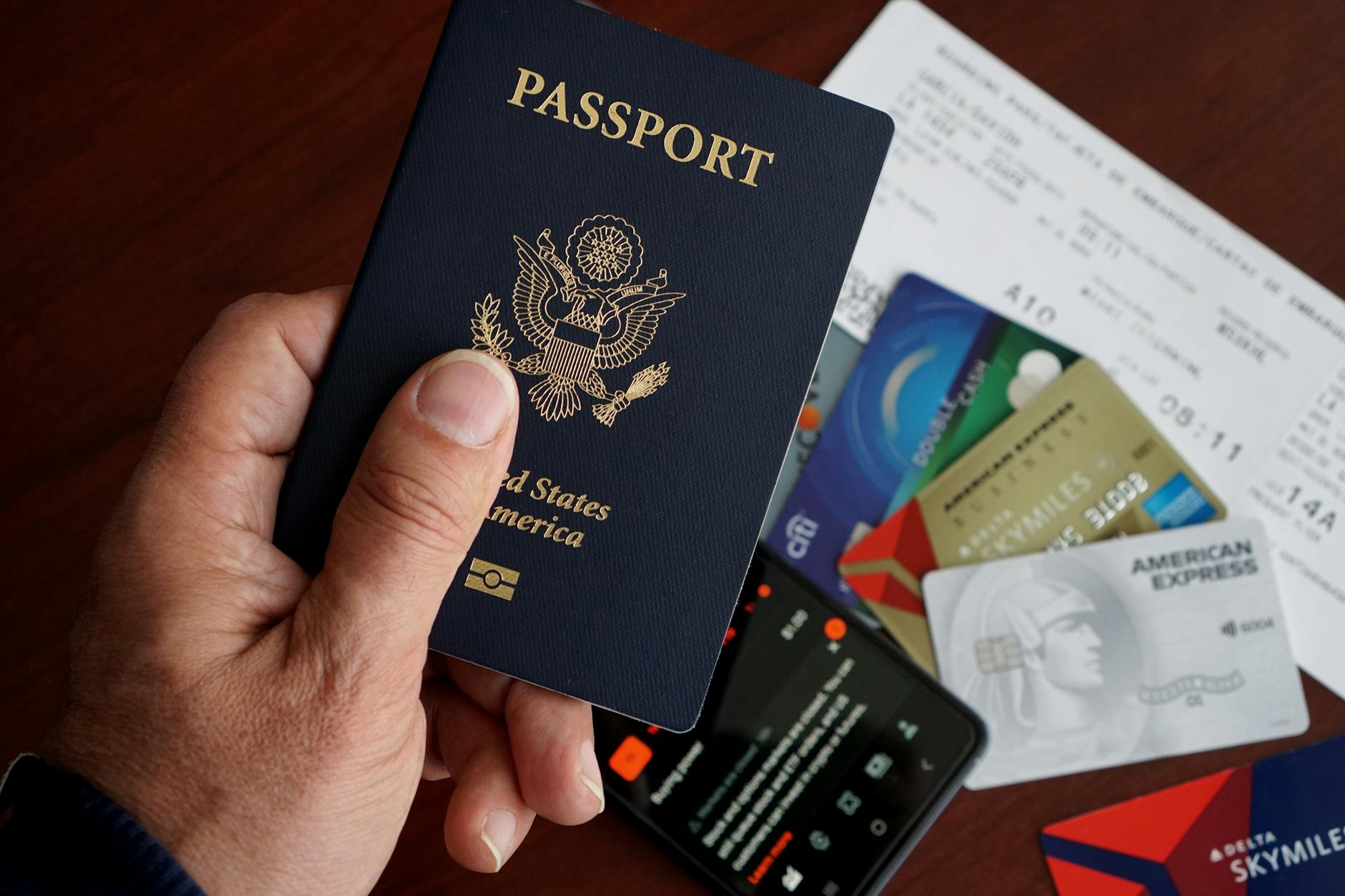
Sydney’s major institutions have all upgraded international student safety protocols following a series of global crackdowns on student activism and unrelated border incidents in 2024–2025.
University of Sydney: Operates a 24/7 Crisis Line (+61 2 9351 2222) and has a dedicated International Student Support Unit that provides pre-travel briefings. In semester 2 of 2026, the university announced it will fund emergency repatriation flights for students in critical distress, capped at $5,000 per student.
UNSW Sydney: Runs ‘Safe Travel Wise’ workshops twice a month. The International Student Compliance team can issue official letters for travel visa applications and maintains a register of students traveling overseas on university business.
University of Technology Sydney (UTS): Offers an on-call welfare service through its UTS Students’ Association and free legal advice on visa matters, including what to do if you’re detained or refused entry overseas.
Macquarie University (North Ryde, greater Sydney): Has a Travel Risk Management Policy that mandates a security assessment for any university-funded student travel. The Student Wellbeing team also runs a digital safety module covering border device searches.
If you haven’t enrolled yet, compare these provisions. They can matter more than the campus gym or library hours.
Understanding the Wider Risk Picture: Activism, Social Media, and Border Screening
The KCL case is not an isolated outlier. Several high-profile detentions of student activists at international borders have been recorded between 2023 and 2026, including cases in the United States, Israel, and the UAE. The common thread? A mismatch between the traveler’s self-perception (‘I’m just a student going to a conference’) and the host state’s perception (‘This individual has entries in a security database’).
Social media activity is now routinely screened. Five Eyes intelligence-sharing arrangements mean that information recorded about you in one country can be accessible to immigration authorities in another. Australia’s Home Affairs made it clear in its 2025–26 Integrity Review: “Visa applicants and holders should be aware that publicly available social media content may be assessed in relation to character and security checks.”
What does this mean for a Sydney international student? It does not mean you cannot express political opinions. But it does mean you should understand the legal environment of any country you plan to visit, especially regarding protest, political speech, and association with activist groups. If you held a leadership role in a student union, as the KCL student did, check whether your destination country treats such roles as a marker of heightened scrutiny.
Q: Could my social media posts cause problems when I enter Australia or another country from Sydney?
Potentially yes. Australia’s Migration Act allows the Minister to cancel or refuse a visa if the person is considered a risk to the health, safety, or good order of the Australian community. In 2025–26, 37 student visas were cancelled on character grounds that cited social media content, up from 12 in 2021. Other countries with broad security laws may have even lower thresholds. Before traveling anywhere, review your public posts as if you were a skeptical border officer.
Conclusion: Learn from the KCL Case Before You Pack for Sydney
The KCL Students’ Union vice-president flew home safe, but not before several days of detention that could have been avoided with a more careful pre-travel risk assessment. For a student planning to study in Sydney, the lesson is pragmatic, not political.
Australia’s student visa framework gives you enormous freedom to travel – but that freedom comes with an invisible chain to your CoE, your OSHC, and your compliance history. Breach any of those, even accidentally, and you could find yourself on the wrong side of an airport door. Use 2026’s digital verification tools, register your travel with your university, check Smartraveller, and never assume that a student ID card will protect you at a foreign border. It won’t.
Your study in Sydney should be the adventure of a lifetime. With the right preparation, it can be – without any unplanned detours.
Reference Sources
- UK Foreign, Commonwealth & Development Office travel advice – Israel: https://www.gov.uk/foreign-travel-advice/israel – Official British government advice with real-time entry and detention risk assessments, referenced in discussions of the KCL case.
- Australian Department of Home Affairs – Student Visa (Subclass 500): https://immi.homeaffairs.gov.au/visas/getting-a-visa/visa-listing/student-500 – 2026-updated visa conditions and travel facility details.
- Smartraveller – Australian Government travel advisories: https://www.smartraveller.gov.au – The authoritative source for travel risk ratings and consular assistance information for Australian residents.
- TEQSA National Code of Practice 2026: https://www.teqsa.gov.au/latest-news/publications/national-code-practice-providers-education-and-training-overseas-students – Regulatory document outlining provider welfare obligations to international students.
- The Guardian report on KCL student detainment: https://www.theguardian.com/uk-news – Credible UK news outlet that covered the event and subsequent university response (article dated January 2026).