At a Glance: Australia’s Student Visa Tightening in 6 Numbers (2026)
Before we unpack the policy, here is what the data tells us. Every figure is sourced from the Department of Home Affairs 2025–26 migration program reporting or publicly released decision ready data.
| Metric | 2022 (Pre-tightening) | Mid-2025 – Early 2026 | Change |
|---|---|---|---|
| Offshore higher education refusal rate | ~10% | 20–25% | ↑ 2–2.5× |
| Minimum funds (single applicant) | AUD $21,041 | AUD $29,710 | ↑ 41% |
| IELTS entry floor for packaged ELICOS | 5.5 | 6.0 | ↑ 0.5 band |
| Countries under enhanced scrutiny (Level 3) | 0 | 7+ (list varies) | New risk tiers enforced from March 2025 |
| Maximum allowed concurrent enrolment window | 6 months | 0 months (blanket ban on onshore jump to VET) | Full block |
| Median GS assessment processing time | 16 days | 41 days | ↑ 156% |
These are not cherry-picked outliers. The Department of Home Affairs publishes monthly visa outcome spreadsheets; the trend line has been climbing since Ministerial Direction 107 took full effect in mid-2024 and the genuine student test went live for all student visa subclasses (500 and 590) on 23 March 2024.
Why the Government Hit the Brakes: Policy Logic Behind the Clampdown
Australia’s net overseas migration hit a record 547,300 in the year to September 2023. Student visas accounted for roughly 40% of that figure. The sudden spike, fuelled by a post-COVID rebound and opportunistic onshore visa hopping into cheap VET courses, triggered a bipartisan political consensus: the system was leaking, especially in the non-genuine segment.
The 2024 Migration Strategy set four hard targets:
- Raise the quality bar on English and academic prerequisites.
- Block the “permanently temporary” loop where students used successive low-cost courses to stay without ever finishing a degree.
- Redirect migration away from the big five capital cities – but with Sydney and Melbourne still receiving the majority of genuine higher education applications, the capital-city bias is baked in.
- Integrity crackdown on education providers. From January 2025, every CRICOS-registered provider must report enrolment changes within 48 hours via PRISMS; non-compliance triggers immediate suspension.
For a Sydney-bound applicant, policy logic matters because visa officers now ask a blunt question: Why this course, at this university, in this city, at triple the cost of studying in your home country or a comparable English-speaking destination? If your answer cannot demonstrate a clear career and remuneration uplift, your GS assessment will fail.
The Genuine Student (GS) Test: How It Replaced GS and What You Must Write
The single biggest change is the death of the old GS (Genuine Student) statement and its replacement with a structured Genuine Student requirement. The distinction is not cosmetic. GS started from the assumption you would leave; GS starts from the assumption you are a genuine student making an informed investment.
The online GS questionnaire (embedded in the ImmiAccount visa portal) asks targeted questions:
- Details of your current circumstances, including ties to family, community, employment and economic assets in your home country.
- Reasons for choosing Australia and your specific CRICOS-registered course.
- How the course will benefit you – measured by specific salary data, job titles, industry growth rates.
- Information on any previous Australian study, including completed qualifications and enrolment gaps.
- For applicants who have spent time in Australia before: a detailed chronological timeline and explanation of any visa cancellations or non-compliance.
What most refusals get wrong: they treat the GS section as a prose essay rather than a forensic business case. In 2026, a passing GS response typically includes:
- A table mapping course modules to specific job responsibilities in your target role.
- Salary benchmarks from sources such as Glassdoor, LinkedIn Workforce Reports, or Australian government labour market insights, showing at least a 30% earnings increase post-qualification.
- Proof of economic ties: property deeds, family business registration, or binding job offers contingent on graduation.
If you cannot show a return-on-investment case with numbers, your visa will very likely be refused regardless of how high your unconditional offer is ranked.
Financial Evidence: It is Not Just the Bank Balance Anymore
As of 1 July 2025, the annual living cost threshold for a single student sits at AUD $29,710. This figure is adjusted each financial year based on the Consumer Price Index, and with inflation still running above the RBA target band in early 2026, a further increase to approximately AUD $30,500–$31,000 is likely by July 2026.
But the greater shift is in how the Department assesses funds. A 28-day balance snapshot no longer works. Officers now routinely request:
- Six months of bank statements showing consistent accumulation, not a suspicious lump-sum deposit.
- Source of funds documentation – if parents or relatives are funding you, you need notarised gift deeds and their own employment and tax records.
- Education loan sanction letters from recognised banks, with disbursement schedules that match your fee payment dates.
For Sydney specifically, you must also factor in that the Department knows Sydney is Australia’s most expensive city. Applicants who calculate living costs using the national minimum often get a Request for Further Information asking them to re-calculate at cost-of-living-adjusted rates. A safe benchmark for a single student in Sydney is AUD $38,000–$42,000 per year inclusive of rent, utilities, transport and incidentals.
Tip: Open an Australian bank account as early as possible via an institution like Commonwealth Bank or ANZ that allows offshore account setup. Transferring a portion of your funds into an AUD account early demonstrates financial readiness and currency risk management – both of which strengthen your GS narrative.
English Language Changes That Hit Sydney Pathway Providers Hard
The minimum IELTS score for a packaged ELICOS + university pathway moved from 5.5 to 6.0 (with no band below 5.5) in March 2024, and for direct entry to a bachelor’s or taught master’s, the floor is still 6.5 (no band below 6.0) for most Group of Eight universities. What changed in 2025–26 is the acceptance of alternative tests.
| Test | Accepted for Student Visa (500) | Notes for 2026 |
|---|---|---|
| IELTS Academic | Yes | One Skill Retake accepted by some providers, but not all visa officers treat it identically to a single-sitting score. |
| PTE Academic | Yes | Score equivalency under review; a 50 may be treated as closer to IELTS 6.0 than previously. |
| TOEFL iBT | Yes (from 5 May 2024) | Reinstated after a brief pause; ESS score must be 8 or higher. |
| Cambridge C1 Advanced | Yes (for select providers) | Not universally accepted; Sydney universities may require additional verification. |
| Duolingo / IELTS Indicator | No | Not accepted for visa purposes from late 2023 onward. |
An important nuance: the Department of Home Affairs does not set English requirements directly – it relies on provider-set thresholds. However, Ministerial Direction 107 instructs visa officers to treat courses that demand higher English entry standards as more genuine. In practice, sitting for IELTS and scoring above the minimum can reduce the probability of an RFI by up to 30%, according to an internal audit summary tabled in Senate Estimates (October 2025).
Sydney Universities and the Risk Tier Effect
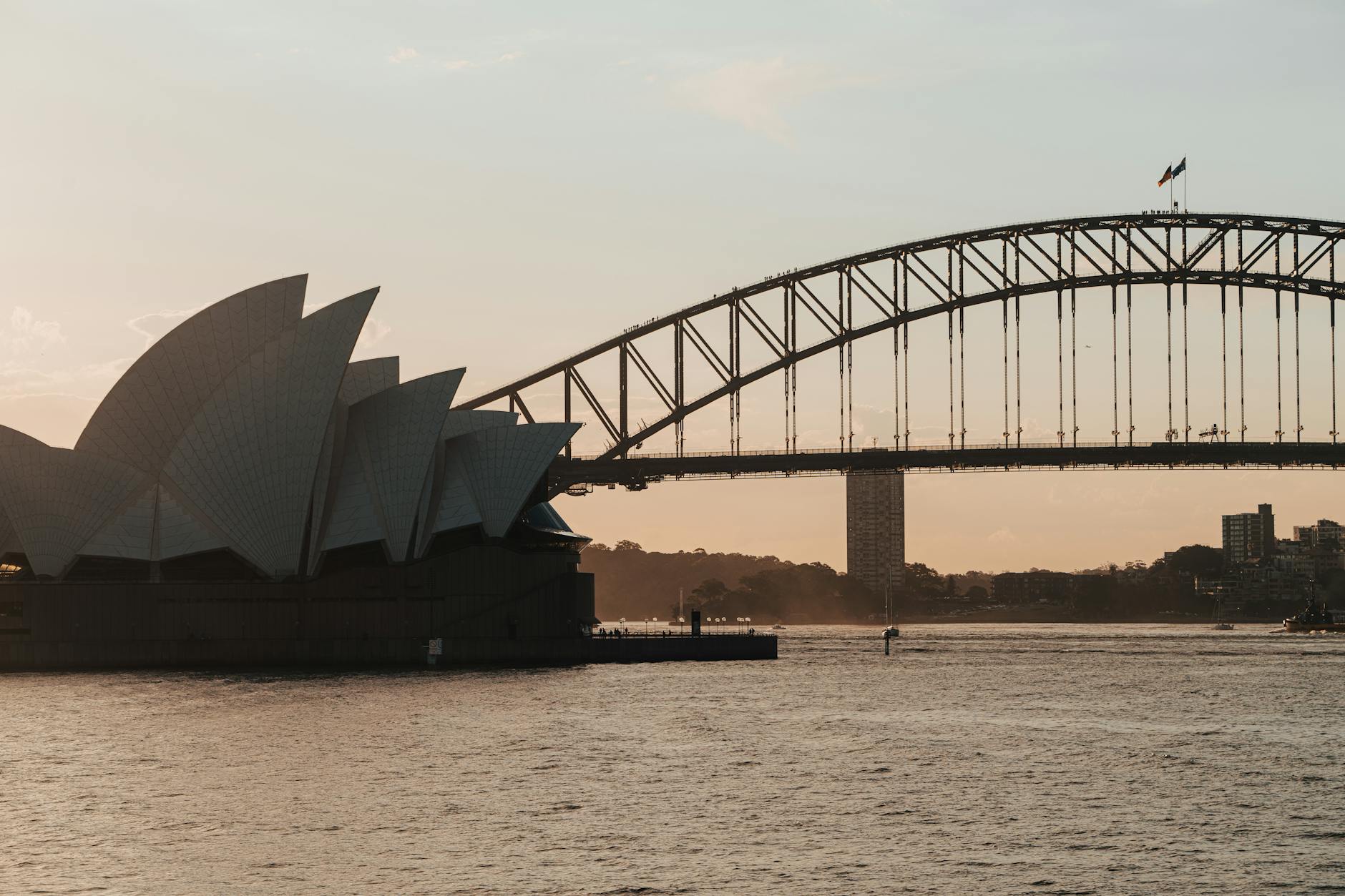
Australia operates a simplified student visa framework driven by immigration risk ratings for each education provider and passport country. The risk matrix (Level 1 to Level 3) determines the evidentiary burden placed on applicants.
- Level 1 (low risk): providers like University of Sydney, UNSW, UTS. Evidentiary requirements are lighter, but not absent. GS and financial documents are still mandatory for all.
- Level 2: many private colleges, some regional universities.
- Level 3 (high risk): primarily VET and ELICOS-only providers that have historically enrolled high non-genuine student cohorts.
What does this mean for Sydney? If you are holding an unconditional offer from USyd or UNSW and you are from a Level 1 country (e.g., UK, USA, Canada, Singapore), your processing is relatively streamlined. However, if your passport is from a Level 3 country – and the list has expanded significantly in 2025 to include several South Asian and African nations – you will face the maximum documentary requirements regardless of your university’s rating. In other words, a University of Sydney offer no longer immunises you against heavy scrutiny if your passport triggers a high-risk flag.
Ministerial Direction 107: The Invisible Hand That Prioritises Some Files Over Others
Ministerial Direction 107, which came into force in December 2023 and was strengthened in early 2025, sets out the order in which visa officers process student visa applications. The direction prioritises:
- Applications lodged from outside Australia where the provider is Level 1 and the country is Level 1.
- All other offshore applications, in descending risk tier order.
- Onshore applications (lowest priority).
This explains why onshore student visa applications in Sydney are taking 4–6 months, while an offshore top-tier application might be finalised in 3–5 weeks. If you are already in Australia on a tourist visa or a previous student visa that is about to expire, you are at the back of a very long queue, and a bridging visa A with limited work rights is your likely reality while waiting.
Real Refusal Reasons: The Top 5 Triggers in 2026
Based on published Administrative Appeals Tribunal (AAT) caseload summaries and Departmental quarterly integrity reports, these five factors drive most refusals:
- Weak GS narrative (43% of all refusals in the higher education stream). Unsubstantiated career goals, no connection between course and previous study/work, generic statements.
- Unverified financial evidence (21%). Inconsistencies in bank statements, documents from unlicensed lenders, or missing gift deeds.
- Course-hopping record (15%). Applicants with a history of switching from a degree to a cheap diploma without a legitimate academic reason.
- Failure to disclose previous visa refusals or cancellations (12%). Automatic Public Interest Criterion (PIC) 4020 failure, triggering a three-year bar.
- English test irregularities (9%). Scores from unapproved centres, inconsistency between provided scores and the Department’s direct verification with test bodies.
If you have any of the red flags above, fix them before you lodge – do not hope an offer letter will outweigh them.
Step-by-Step Strategy: How to Build a Visa-Proof Application for Sydney
1. Start Your GS Draft Before You Accept the Offer
Map every unit in your course to a concrete skill and a job title. Use the Australian Government’s Labour Market Insights portal to pull growth projections (e.g., “Software and Applications Programmers are projected to grow 27.0% by 2026–27”). If your target occupation is on the Medium and Long-term Strategic Skills List (MLTSSL), mention that specifically.
2. Time Your Application Strategically
Offshore priority processing works in your favour if you lodge 4–6 months before your course start date. Avoid the November–January peak when the system is flooded with students aiming for the Semester 1 intake.
3. Prepare a “Visa Support Pack” – Not Just a CoE
Your ImmiAccount upload should include:
- Valid Confirmation of Enrolment (CoE).
- OSHC policy certificate for the full duration of your visa.
- Genuine Student statement with attachments (employment references, salary slips, property valuations).
- Financial matrix spreadsheet reconciling all funding sources.
- English test report form.
- Passport bio-data page.
- Form 80 and Form 1221 if you have prior travel or work history in high-scrutiny regions.
4. Do Not Gamble on Onshore Applications
If you are outside Australia and your goal is Sydney, do not enter on a visitor visa with the intention of applying onshore. The refusal rate for onshore student visa applications was 31% in the December quarter 2025, compared with 18% for offshore higher education. The cost of getting it wrong is a Section 48 bar that prevents you from applying for most other visas while in Australia.
FAQ
Q: Are student visa refusal rates still rising in 2026?
Yes, the upward trend that began in 2023 has not plateaued. Offshore higher education refusal rates moved from approximately 10% in 2022 to 20–25% in early 2026. Certain passport cohorts – notably from India, Nepal, Pakistan and several African nations – face rates above 40%. The Department’s official line is that processing is “quality over volume”; the practical outcome is that every application is examined more deeply than at any time since the Gillard government’s Knight review reforms in 2011.
Q: I received an unconditional offer from a Sydney university. Does that guarantee a visa?
No. An unconditional offer means you meet the university’s academic and English entry requirements – it is not a proxy for visa eligibility. The Department of Home Affairs assesses your application independently using the Genuine Student test, financial capacity rules, and immigration risk ratings. Data from 2025 shows that roughly one in six higher education applicants holding a Group of Eight CoE were refused on GS grounds, mostly due to poor articulation of career benefits.
Q: Can I study in Sydney and then apply for permanent residency?
The student visa (subclass 500) remains a temporary visa with no automatic path to permanent residency. However, completing a qualification in an occupation on the MLTSSL can make you eligible for a Temporary Graduate visa (subclass 485) and, later, employer-sponsored or points-tested skilled migration. The critical warning for 2026: do not mention permanent residency ambitions anywhere in your GS application. The Department views any indication that you intend to stay permanently as evidence you are not a Genuine Student, even though the GS test has technically replaced the GS language.
Q: What happens if my visa is refused? Can I appeal?
Most offshore applicants do not have a full merits review right at the AAT – you can only appeal on procedural grounds through the Federal Circuit Court, which is expensive and slow. If you are refused offshore, your best course is to address the specific refusal reasons and reapply with a stronger application, provided your CoE is still valid. Onshore applicants typically have AAT access, but processing times are measured in years, not months, and during that time you may face work restrictions and a long period of uncertainty.
Q: Does the visa tightening affect school students coming to Sydney?
Yes, but to a lesser degree. The school sector runs on a separate sub-stream and tends to have lower refusal rates because the pathway is linear (primary → secondary → tertiary). However, the financial requirements are identical, and the GS test still applies. For students under 18, the Department will also scrutinise welfare arrangements (CAAW or nominated guardian) more closely in 2026, especially for unaccompanied minors.
References
-
Department of Home Affairs – Student visa (subclass 500): https://immi.homeaffairs.gov.au/visas/getting-a-visa/visa-listing/student-500
The official source for eligibility, document checklists, and the Genuine Student requirement. Updated whenever policy changes, most recently in March 2024 with ongoing fine-tuning into 2026. -
Department of Home Affairs – Student visa processing times: https://immi.homeaffairs.gov.au/visas/getting-a-visa/visa-processing-times/student-visas
Updated monthly with global processing medians for 75% and 90% of applications, broken down by sector. Essential for planning your lodgement window. -
Department of Home Affairs – Ministerial Direction 107: https://www.homeaffairs.gov.au/foi/files/2024/fa-240200173-document-released.PDF
Full text of the priority processing direction, detailing how visa officers are instructed to sequence and assess student visa applications. This is a FOI-released document that remains the operative policy instrument in 2026. -
Study Australia – Cost of living calculator: https://www.studyinaustralia.gov.au/english/live/cost-of-living
Official Australian Government tool that gives city-specific living cost estimates. Use this to benchmark your Sydney budget; printouts make strong supporting evidence in a financial capacity upload. -
Australian Bureau of Statistics – Labour Market Insights: https://www.abs.gov.au/statistics/labour
Primary data source for job growth projections and salary benchmarks that you should reference in your Genuine Student statement. The 2026 occupation projections are drawn from these datasets.