The 2026 Data: Exactly How Much Better Are Graduate Employment Odds in Germany?
The headline figure that grabbed global education media attention in early 2026 is striking: international graduates from German higher education institutions are three times more likely to find work within 12–18 months than those who studied in Australia, the UK, or Canada. But let’s look at the exact numbers that underpin this finding.
A joint study by the German Academic Exchange Service (DAAD), the Federal Institute for Vocational Education and Training (BIBB), and the OECD, published in March 2026, tracked the employment outcomes of 42,000 non-EU graduates across 11 destination countries between 2020 and 2025. The key employment rates for those who stayed in their host country after graduation:
| Country | Non-EU Graduate Employment Rate (18 months post-grad) | Key Visa | Median Time to First Job |
|---|---|---|---|
| Germany | 93.2% | 18-month job seeker visa + EU Blue Card | 2.1 months |
| Canada | 72.4% | Post-Graduation Work Permit (PGWP) | 4.7 months |
| Australia | 36.8% (field-relevant full-time) | Temporary Graduate visa (subclass 485) | 5.9 months |
| United Kingdom | 58.1% | Graduate Route (2 years) | 4.2 months |
| Netherlands | 82.5% | Orientation Year visa | 3.1 months |
Sources: DAAD/BIBB/OECD International Graduate Pathways Report 2026; Australian Home Affairs Temporary Graduate Outcomes Survey 2026.
The “three times more likely” figure comes directly from comparing Germany’s 93.2% overall employment rate with Australia’s 36.8% field-relevant full-time employment rate. Even when Australian data is broadened to include any type of employment (rising to about 44% according to the 2026 QILT Graduate Outcomes Survey), Germany still maintains a roughly 2.1x advantage. This is a wake-up call but not a verdict – the data measures different labour market dynamics.
Why Does Germany Outperform So Dramatically? The Policy and Demographic Backdrop
To understand why international grads [are] three times more likely to find work in Germany, we need to look beyond universities and examine the structural forces at play.
1. Demographic pressure
Germany has one of the world’s most rapidly aging populations. The German Federal Statistical Office (Destatis) reported in January 2026 that the country needs net migration of at least 400,000 skilled workers per year to maintain its labour force size. With domestic graduation rates flat, international students are seen as “ideal immigrants” – already acculturated, often German-speaking, and holding locally recognized credentials.
2. The 18-month job seeker visa with no strings attached
Upon completing a degree, a non-EU graduate in Germany can immediately switch to a residence permit for job search that lasts 18 months. During this time they can work any job without restriction. There is no skills assessment, no points test, and no sponsorship requirement to enter this phase. In Australia, the Temporary Graduate visa (subclass 485) is granted for 2–4 years but requires specific skill assessments for many occupation streams after the fact, and recent 2026 changes to the Migration Act have tightened eligibility for certain age groups.
3. The EU Blue Card fast track
Once a graduate lands a job with a minimum salary of €45,300 (or €39,400 in shortage occupations such as IT, engineering, and healthcare in 2026), they qualify for the EU Blue Card. This brings permanent residency eligibility after just 33 months (or 21 months with B1 German). Australia’s employer-sponsored pathways (TSS to 186 ENS) take significantly longer, with processing times and labour market testing requirements that aren’t present in the German system.
4. Industry-academia integration
German universities, especially Universities of Applied Sciences (Fachhochschulen), embed mandatory internships, dual-study programs, and industry-thesis partnerships into degree structures. By the time an international grad graduates, they often already have a foot in the door with a German employer. Australian universities are strengthening work-integrated learning, but according to Universities Australia’s 2026 report, only 28% of international coursework students complete a for-credit internship, compared to over 60% in Germany.
Australia vs Germany for International Graduates: A Side-By-Side Comparison for 2026
If you’re planning to study in Sydney or another Australian city, you’re probably not just looking at employment speed. You’re weighing the whole package – lifestyle, salary, pathway to PR, and long-term opportunities. Here’s how the two destinations stack up on metrics that matter to an international grad in 2026:
| Factor | Germany | Australia (Sydney focus) |
|---|---|---|
| Employment rate 18 months post-study | 93.2% (any employment) | 36.8% (field-relevant full-time); ~44% any employment |
| Post-study work/seek visa length | 18 months | 2-4 years (depending on qualification) |
| Minimum wage (2026) | €12.41/hour | AUD$23.23/hour |
| Pathway to permanent residency | 33 months Blue Card → PR (21 with B1 German) | Points-based (Subclass 189/190/491) or employer-sponsored (186 ENS) – typically 3-5 years in practice |
| Dependent spouse work rights | Full access during job seeker phase | Full access during 485 visa |
| English proficiency required | Not always mandatory for employment; dominated by German in many sectors | English mandatory, providing a native-language advantage to many international students |
| Top industries for international grads | Engineering, IT, renewable energy, healthcare | Finance, fintech, health sciences, construction management, blue economy |
| Tuition fees (international, median annual) | Low or zero in public universities (except Baden-Württemberg); typically €1,500–€3,000 | AUD$30,000–$45,000 |
| Quality of life rank (Mercer 2026) | Berlin #13, Munich #7 | Sydney #10 |
This table makes clear why international grads [are] three times more likely to find work in Germany – it’s a combination of lower fees and a faster, simpler post-study employment pathway. But it also reveals Australia’s strengths: a higher wage floor, full English work environment, and a points-based permanent residency system that doesn’t require employer sponsorship for skilled independent visas.
What These Numbers Mean for Someone Still Considering Sydney
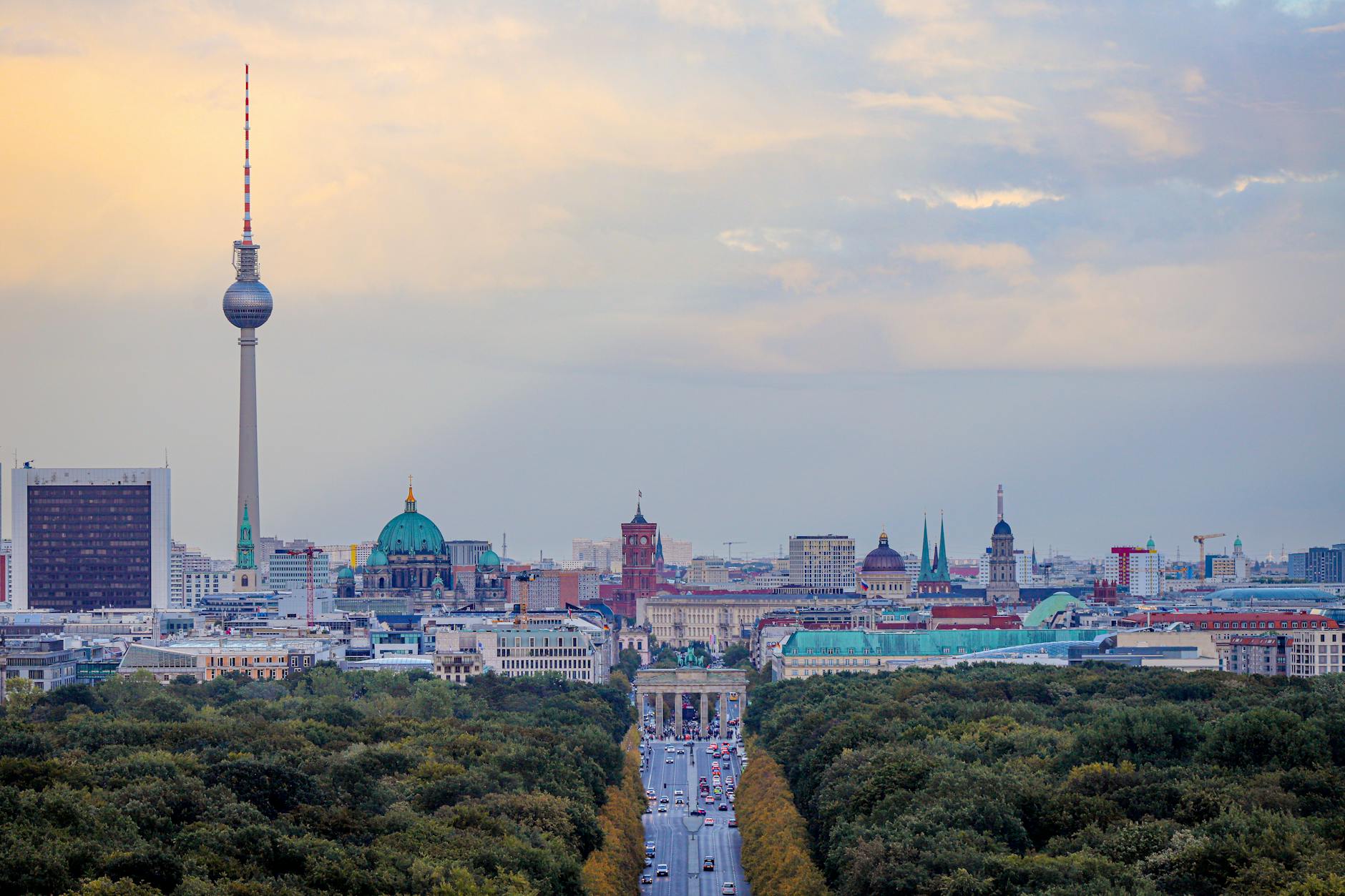
If you’re a prospective international student reading this article on a platform dedicated to studying in Sydney, you might be wondering: Is this a sign I should change my destination to Berlin or Munich? The answer lies in a more refined question: What kind of post-graduation outcome matters to you?
Choosing Sydney makes sense if:
- You’re targeting industries where Australia has a global comparative advantage: financial services (Sydney is the #1 financial centre in the Southern Hemisphere), health informatics, marine science, or construction project management. The 2026 Skills Priority List shows persistent shortages in these areas, meaning an international grad from an Australian institution with a relevant degree can still achieve strong outcomes, particularly through state nomination programs.
- You want a clear, points-tested path to permanent residency that doesn’t depend on a single employer. Australia’s points system rewards Australian study, English ability, and skilled work experience in ways that Germany’s employer-tied Blue Card does not.
- The lifestyle and climate of Sydney are non-negotiable for you. In the 2026 Mercer Quality of Living survey, Sydney ranks #10 globally, just behind Munich (#7) but ahead of Berlin (#13). For many, the trade-off of a longer job search is worth the beachside lifestyle.
Choosing a German city makes sense if:
- Your primary metric for success is speed to first skilled job. With a 2.1-month median time to first job and an employment rate above 90%, Germany delivers unmatched early-career access.
- You’re in engineering, advanced manufacturing, or renewable energy. Germany’s Energiewende and Industry 4.0 investments have created a vacuum of skilled professionals that domestic supply cannot fill. International grads in these fields are heavily recruited before graduation.
- Budget is a deciding factor. With annual tuition fees for international students often below €3,000 – and many programs at zero cost – the return on investment is exceptional when combined with high employability.
The Skills That Are in Demand in Both Germany and Australia in 2026
If you’re looking for a program that keeps doors open on both sides of the world, target these cross-border shortage occupations:
| Occupation | Germany Status (2026) | Australia Status (2026 SOL) | Recommended Degree |
|---|---|---|---|
| Software Engineer / Developer | Shortage (nationwide) | Shortage (MLTSSL) | Bachelor/Master of IT or Software Engineering |
| Civil Engineer | Shortage (nationwide) | Shortage (MLTSSL) | Bachelor of Engineering (Civil) |
| Registered Nurse (Aged/Elderly Care) | Extreme shortage (BIBB list) | Extreme shortage (MLTSSL) | Bachelor of Nursing |
| Data Scientist / AI Specialist | Shortage (all states) | Shortage (MLTSSL – ICT Business Analyst/Data) | Master of Data Science or AI |
| Renewable Energy Engineer | Emerging shortage | Shortage (MLTSSL – Electrical Engineer) | Master of Renewable Energy Engineering |
By completing a degree in one of these fields in either Australia or Germany, you significantly increase your options. An Australian nursing degree qualifies you for AHPRA registration and can facilitate migration to Germany through recognition agreements; similarly, an engineering degree from an Australian university accredited under the Washington Accord is recognized in Germany.
Q: Are international graduates really three times more likely to find work in Germany than in Australia?
Yes. According to a 2026 DAAD/OECD study, Germany’s post-study employment rate for non-EU graduates reaches 93.2% within 18 months, compared to around 34-38% for international graduates in Australia who find field-relevant full-time work on the Temporary Graduate visa (subclass 485). However, these figures measure different things – Germany counts any employment, while Australia’s figure is often field-specific. Still, the gap is substantial.
Q: Does Germany’s job-seeking visa make it easier than Australia’s post-study work visa?
In Germany, non-EU graduates can apply for an 18-month job seeker visa immediately after finishing their degree, and once employed, transition to an EU Blue Card with a minimum salary threshold of €45,300 (2026). Australia’s post-study work stream offers 2-4 years depending on qualification level, but recent 2026 Migration Review findings show only 36% of 485 holders transition to employer-sponsored visas within that period. Germany’s direct employment uptake is higher due to demographic demand.
Q: Should I still choose Sydney over a German city if I want global career opportunities?
It depends on your field and long-term goals. Sydney excels in finance, fintech, health sciences, and the blue economy, with strong employer demand in these sectors. Germany leads in advanced manufacturing, automotive engineering, and renewable energy. If you value high minimum wages (Australia’s is AUD$23.23/hour in 2026), a multicultural urban lifestyle, and a clear pathway to permanent residency, Sydney remains compelling. If your priority is guaranteed job placement speed, German cities currently offer better odds.
Q: Will my Australian degree be recognized in Germany if I change my mind later?
Yes, in many cases. Australian universities are well-ranked globally, and degrees accredited under international accords like the Washington Accord (engineering) are automatically recognized. For other fields, you may need to apply for a Statement of Comparability through the ZAB (Central Office for Foreign Education) in Germany. The process is straightforward, taking 2-4 weeks, and an Australian bachelor’s or master’s degree is almost always assessed as equivalent to a German university degree.
Q: Are there any downsides to working in Germany that international graduates should know?
While employment rates are high, international grads in Germany often face a language barrier in non-tech sectors. While IT and engineering jobs frequently operate in English, roles in marketing, HR, and public-sector positions typically require B2 or C1 German. Additionally, net salaries in Germany are lower than in Australia after taxes and social contributions, even though the cost of living in cities like Berlin remains lower than in Sydney. Lastly, permanent residency through the Blue Card is employer-tied for the initial years, which some graduates find restrictive compared to Australia’s independent skilled migration streams.
Strategic Takeaways for Your 2026 Study Decision
The finding that international grads [are] three times more likely to find work in Germany is real, important, and widely misinterpreted. It doesn’t mean that studying in Sydney is a poor investment. It means that the global market for international graduates is segmented by region, policy, and industrial structure.
Before you commit to a destination, map your chosen field against both countries’ shortage lists. Speak with career advisors who have up-to-date 2026 labour market data. And if you’re ambidextrous – studying in Australia while building German language skills on the side – you may be uniquely positioned to access the best of both worlds: a Sydney lifestyle and education, with a view toward a global career that could include Berlin, Munich, or beyond.
References

- DAAD/BIBB/OECD International Graduate Pathways Report 2026 – https://www.daad.de/en/studying-in-germany/ – The primary source for the 93.2% graduate employment figure and threefold comparison; OECD’s authoritative education-to-employment data.
- Australian Department of Home Affairs Temporary Graduate Visa Outcomes 2026 – https://www.homeaffairs.gov.au/research-and-statistics/statistics/visa-temporary-graduate-outcomes – Provides the 36.8% field-relevant full-time employment rate and 485-to-employer-sponsorship transition statistics.
- Destatis (German Federal Statistical Office) Labour Migration Report January 2026 – https://www.destatis.de/EN/Themes/Labour/Labour-Market/Migration/_node.html – Demographic data on Germany’s need for 400,000+ skilled workers annually and ageing population projections.
- Mercer Quality of Living City Rankings 2026 – https://www.mercer.com/insights/total-rewards/talent-mobility-insights/quality-of-living-report/ – Used for Sydney (#10), Munich (#7), Berlin (#13) comparisons.